
Bridges in Painters Hill
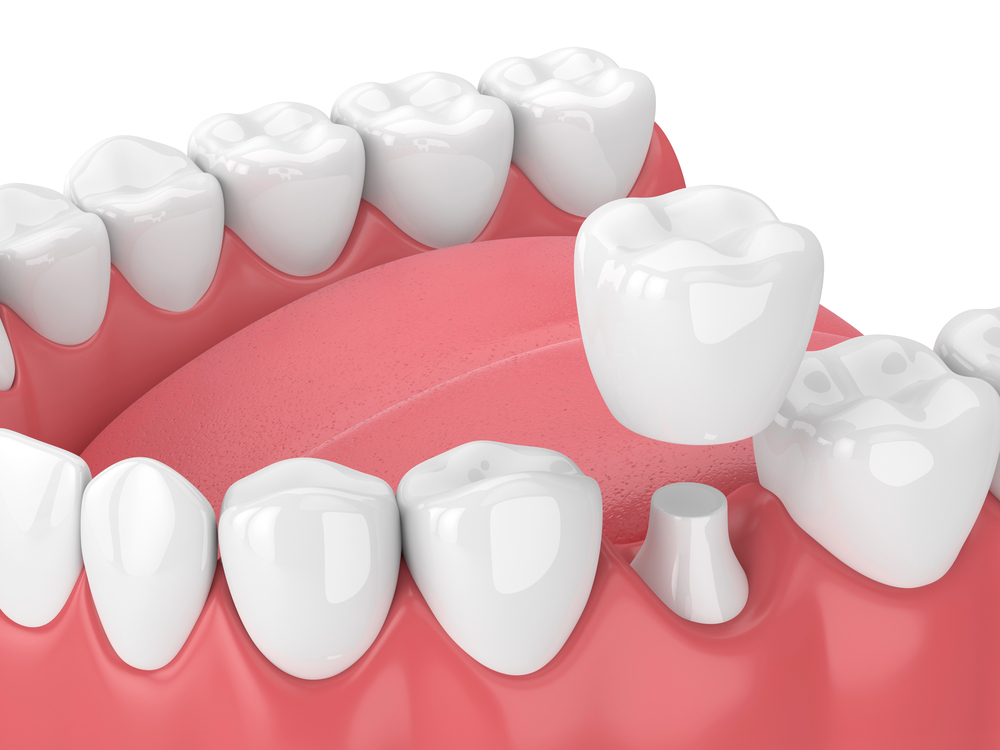
When a single back tooth is lost, the teeth on either side often begin to drift into the open space, and the tooth above or below can shift too. Chewing may feel uneven, food can collect in the gap, and many people find themselves favoring one side of the mouth. A dental bridge fills that space with a replacement tooth anchored to the healthy teeth beside it. At Boulder Rock Dental, Dr. Thinh Tran and Dr. Jake Ryan regularly help patients from Painters Hill and the surrounding Flagler County coast restore a complete, comfortable bite.
Every bridge starts with a conversation and a thorough dental exam. We ask how long the tooth has been missing, whether chewing or speaking has changed, and what matters most to you, whether that's appearance, function, or both. Then we look closely at the teeth that would support the bridge and at the health of your gums. Our general dentists and dental hygienist work together, so this visit is also a chance to catch anything else that needs attention, including signs of decay or gum disease.
A traditional bridge has three main parts. The pontic is the artificial tooth that fills the gap. The abutments are crowns placed over the natural teeth on either side, which hold the pontic in place. Together they form one connected restoration that stays in your mouth and isn't removed at night like a denture. For Painters Hill patients, this first visit gives you a clear picture of whether a bridge is the right fit before anything else happens.
Bridges suit many situations. Common examples include a tooth lost to an extraction, a front tooth damaged in an accident, or a gap left after an older restoration failed. The key requirement is that the neighboring teeth are strong enough to serve as anchors, and that your gums are healthy enough to support the work. If we find gum disease, we can address it first with scaling and root planing or other gum treatment, then move forward once your mouth is ready.
A bridge isn't always the only answer, and we'll talk through alternatives honestly. Because our team also places dental implants and provides partial dentures, we can compare those options side by side with a bridge. For instance, if the teeth next to a gap are completely healthy and you'd prefer not to reshape them, an implant may be worth discussing. If several teeth are missing in different areas, a partial denture might make more sense. Our goal is to match the treatment to your specific mouth and preferences.
The Process From Preparation to Placement
Once you decide on a bridge, we begin by preparing the abutment teeth. This involves gently reshaping them so the crowns can fit over them securely. We focus on your comfort throughout, and the area is numbed before we begin. Next, we take precise impressions of your teeth. These capture the exact shape of your bite so the finished bridge lines up naturally with the teeth around it.
While your permanent bridge is being made, we protect the prepared teeth with a temporary restoration. At your next appointment, we remove the temporary, check the fit and color of the final bridge, and make any small adjustments before cementing it in place. We'll have you bite down and test the feel so that chewing feels even. Here's what you can generally expect along the way:
- An initial exam and treatment discussion
- Preparation of the supporting teeth and impressions
- A temporary restoration to wear between visits
- Fitting, adjustment, and cementing of your permanent bridge
Caring for Your Bridge at Home
A bridge needs daily care, especially along the gumline and underneath the pontic, where food and plaque can build up. Brush twice a day and clean beneath the bridge every day, since standard flossing alone can't reach under the replacement tooth. We'll show you how to do this at your fitting so you leave confident in your routine.
Regular visits matter just as much. Because the bridge depends on the natural teeth supporting it, keeping those teeth free of decay and your gums healthy is essential. Our hygienist provides dental cleanings and periodontal maintenance, and during exams we check the bridge for wear and fit. If something ever feels off, we offer emergency dental appointments for Painters Hill families who need prompt help.
Insurance, Financing, and Membership Options
We accept all major PPO insurance plans and are happy to help you understand how your coverage may apply to a bridge. We also welcome self-pay patients. Before treatment begins, we'll review your options so there are no surprises.
To make care more manageable, we offer financing through CareCredit, iCreditWorks, and Sunbit. For patients without insurance, our in-house dental membership plans are available at $189 or $240 per year, with a $109 annual plan for veterans. If you live in Painters Hill and have been putting off filling a gap in your smile, we'd be glad to see you, answer your questions, and help you find a plan that works for you.